Conference & trends · CONFERENCE
We asked five people: what should trainers prepare when their clients change?
Written so that trainers and center operators can hear the five conference speakers in their own words and decide what to ask members first, in consultations and sessions, right now.
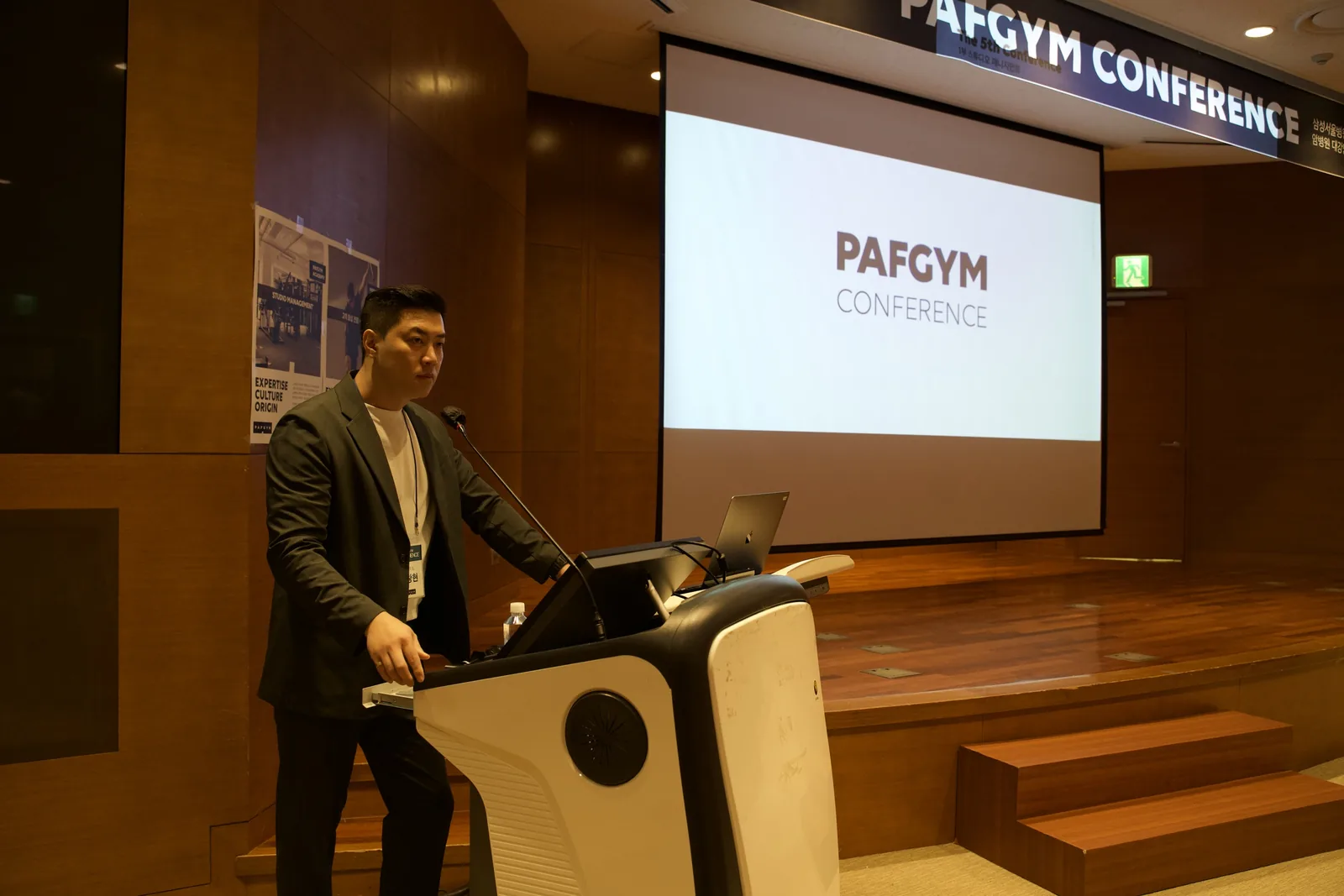
Ahead of the ACSM × PAFGYM Joint Conference on November 22, 2026, five short interview videos went up on PAFGYM's Instagram. This was "PAFGYM Ji-sang Talk," hosted by co-CEO Yoo Ji-sang. One after another, the people in front of the camera were co-CEO Oh Seok-jong of the organizing committee, co-CEO Cha Ju-ho, who gave the first talk of Session 1, manager Ahn Jun-yong of the Dogok Life studio from Session 2, and from Session 3, Professor Park Seung-bo of CHA University and manager Jeong Ui-seong of the Hannam studio. The questions were much the same each time: what they had prepared, why that topic, and who should hear it.
The topics were GLP-1 medications, wearables and continuous glucose monitors (CGM), and hybrid racing, best known through HYROX. All three are shifts flagged in the 2027 ACSM fitness trends, yet what the five people said on camera was closer to the training floor than to a ranking table. Even in short answers introducing their talk titles, the members they already work with came up again and again. How the event came together and why these three topics were chosen are covered in the two earlier columns. This piece follows what the five people said, in order, to see what "our customers are changing" looks like on the floor.
Five episodes of Ji-sang Talk: speaker, talk, one line from the interview
| Speaker | Talk | One line from the interview |
|---|---|---|
| Co-CEO Oh Seok-jong (organizing committee) | The whole conference: opening, three sessions, 12 talks | Go deeper instead of stopping at checking the trends |
| Co-CEO Cha Ju-ho | The post-GLP-1 fitness market (Session 1) | People who have tried the convenient way don't go back |
| Manager Ahn Jun-yong (Dogok Life) | How to explain glucose curves before and after exercise to members (Session 2) | Look at the glucose graph together instead of guessing |
| Professor Park Seung-bo (CHA University) | What happens in the body during a race (Session 3) | Use the different physiology of the runs and each station in training |
| Manager Jeong Ui-seong (Hannam) | Hybrid racing performance programming in practice (Session 3) | Fit running and strength to the member's body instead of mixing them blindly |
One step beyond checking the rankings
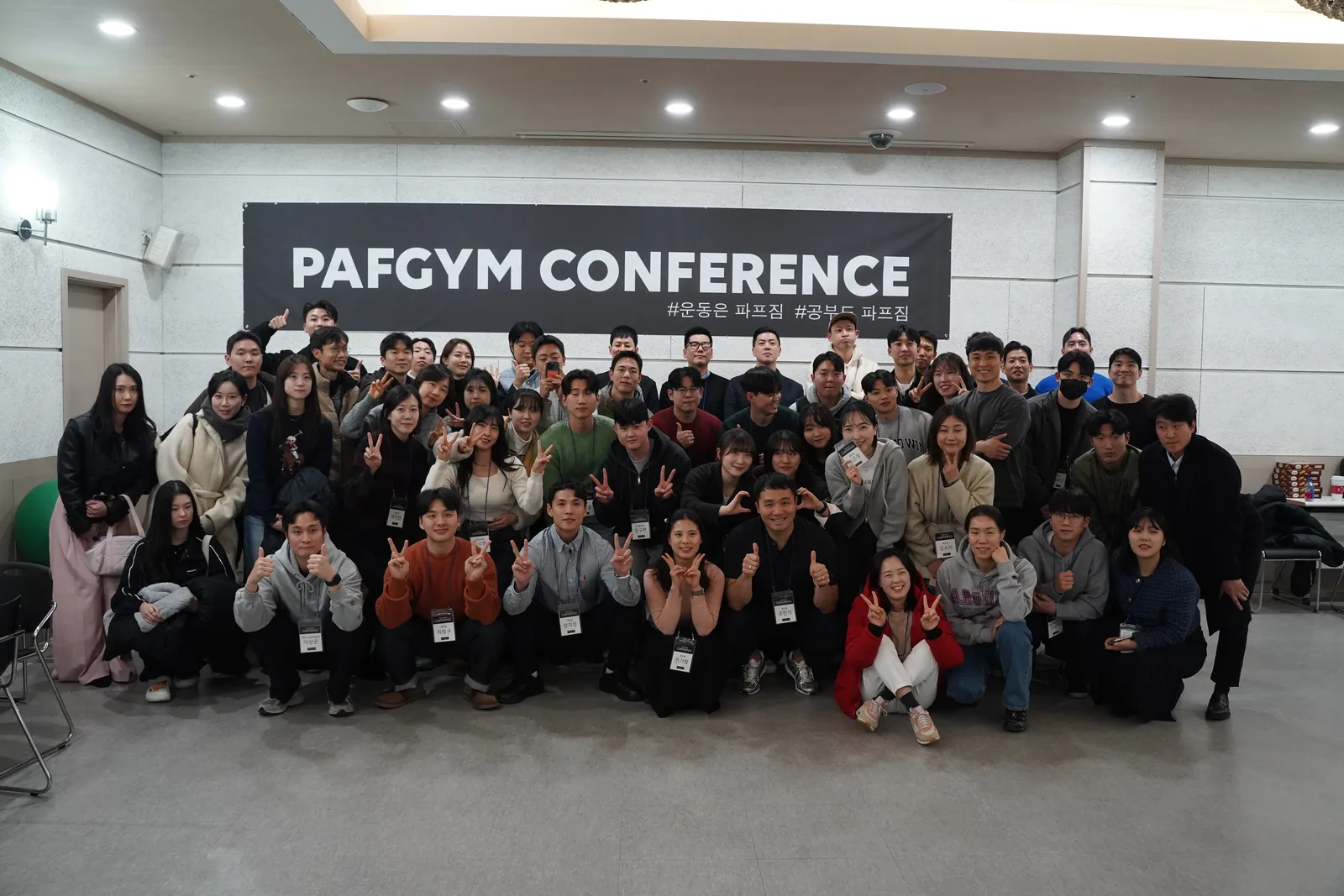
The first episode featured co-CEO Oh Seok-jong, who led the organizing committee. Oh introduced the event as a joint conference held together with the ACSM Professionals Forum run by Wellness Academy, and gave the reason in a few words: to put ACSM's global standards and what PAFGYM deals with on the floor side by side and talk about them together.
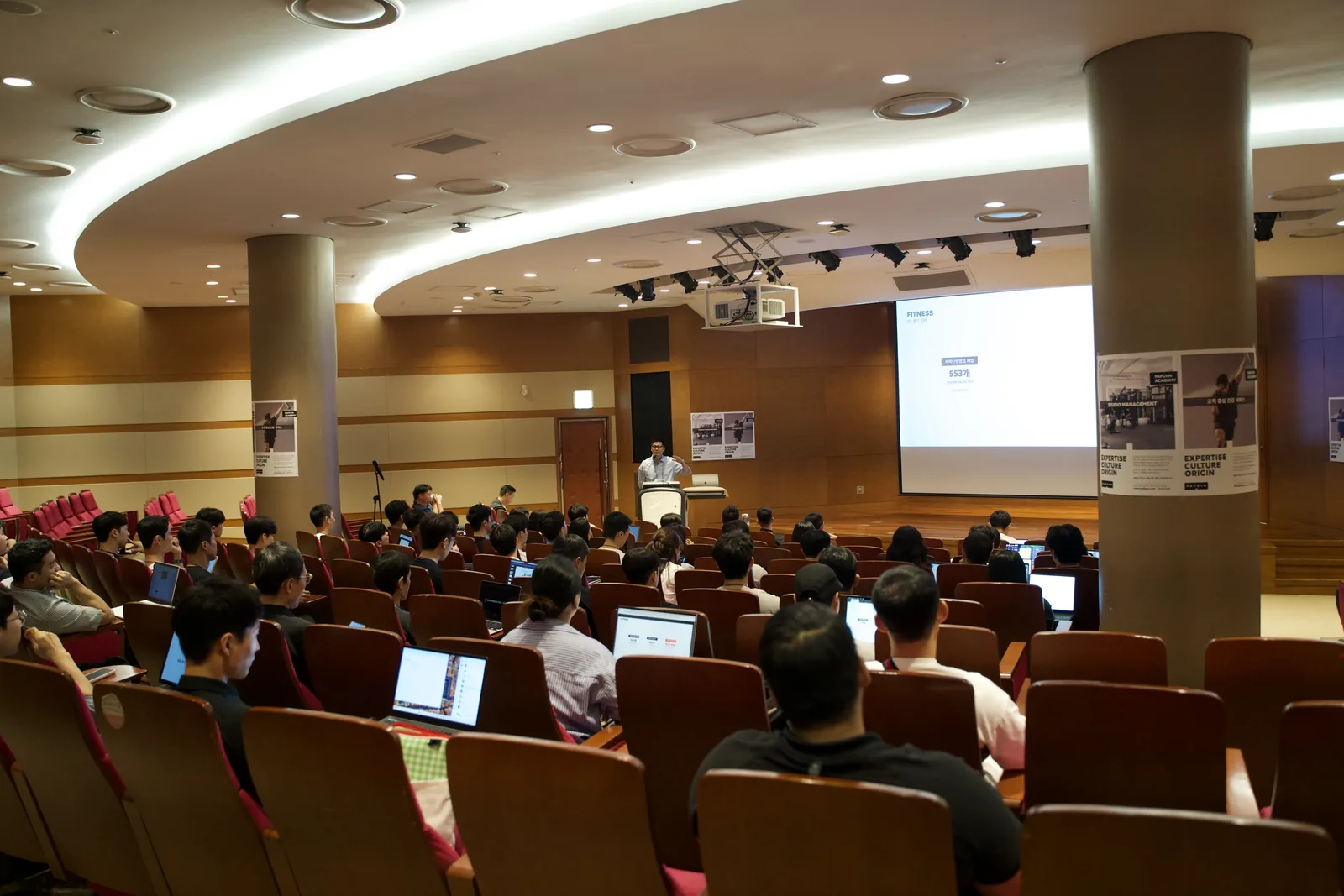
ACSM publishes its fitness trends every year. PAFGYM trainers have followed the results for inspiration and reference, but Oh explained that most of the time it ended with simply checking them. In the video he said: "This time we plan to take what's in the report and go into it in more depth." So the opening was set up as a trend commentary by an ACSM expert, watched on screen together with the participants, and the twelve talks across the three sessions that followed each took one subject: managing obesity in the GLP-1 era, coaching with wearables and data, and hybrid racing. Session 2 featured Kim Jun-hwan, vice president of Kakao Healthcare, and Session 3 featured Professor Park Seung-bo and Dr. Kim Byeong-gon.
Asked at the end whether people could look forward to it, Oh added something about speed: "The times are changing very fast, and it isn't easy to keep up with that." So the idea was to use this conference to set next year's direction early and prepare for it. What exactly was changing so fast, co-CEO Cha Ju-ho spelled out in the next video.
What changes and what doesn't
The title co-CEO Cha Ju-ho chose for the first talk of Session 1 was "The post-GLP-1 fitness market, and what fitness centers need to prepare." Asked what he most wanted to stress this time, he answered, "what changes and what doesn't."
What changes is the way people lose weight. On top of the exercise, nutrition, and rest coaching trainers knew well, GLP-1 obesity medications have arrived, and the speed and amount of weight loss have grown considerably. He went on in the video: "People have chosen convenience, and once they have it, they don't go back." So a center has to be able to tell what has changed from what has stayed the same. He named two things that don't change, and said his talk would center on those two.
Asked whether the rapid growth in GLP-1 users is a crisis or an opportunity for fitness, he said it could be both. If a center tries to position itself next to the medication as a "service that makes you lose weight," it is a serious crisis; if it designs its services around the time on the medication, the period of preparing to stop, and the time after stopping, it becomes a big opportunity. Whether to use the medication and when to stop are decisions to make with the prescribing doctor; what the trainer takes on is the exercise and daily routine that run through that whole period.
Asked who should hear it, he answered in order. First, the owners who run fitness centers and studios; making guidelines and services first, he said, is the very first step. Second, working instructors: "I think the way working instructors deliver their service is going to change a lot," so he wanted them to take it in. One example of that change came from manager Ahn Jun-yong in the next video.
"People have chosen convenience, and once they have it, they don't go back."
From advice in words to a graph
Manager Ahn Jun-yong of the Dogok Life studio, who gave the last talk of Session 2, spoke on "How to explain glucose curves before and after exercise to members: using CGM on the floor." When the host said continuous glucose monitors (CGM) still felt unfamiliar, Ahn explained that it is a small sensor worn on the arm or the abdomen. It is a small data tool for managing your health by checking in an app, in real time, how your blood glucose responds to what you eat, how you sleep, how you exercise, and stress.
Asked about his experience on the floor as the trainer who has used CGM most at PAFGYM, he started with the lifestyle topics that always come up in sessions. Trainers talk to members about sleep, meals, exercise, activity, and stress, and of these, he said, the glucose response was the one trainers could get closest to and actually manage on the floor. His experience was that showing members their own glucose graph after a meal worked far better for bringing about change than telling them, "Try eating it this way." In the video he put it this way: "A big advantage is that we can tell people with real, objective data instead of guessing."
He recommended the talk to trainers who want to look after members' health more broadly, and to anyone who had been interested in CGM but didn't know how to use it, and said he would show the methods through real cases. If glucose curves let you read meals and daily life, members preparing for a race need a basis for reading the body during the race itself. Session 3 started from that question.
"A big advantage is that we can tell people with real, objective data instead of guessing."
What happens in the body during a race
The episode with Professor Park Seung-bo, assistant professor of exercise physiology at the CHA University Graduate School of Sports Medicine, was a captioned video without voice, and the story was carried in the post's description. The talk was titled "What happens in the body during a race: the physiology and energy systems of hybrid racing."
The description opened the talk with a single question: "During a race that moves between running and eight stations, does our body use more aerobic energy, or more anaerobic energy?" According to the description, Professor Park had been analyzing HYROX from the standpoint of exercise physiology by simulating actual races, and the talk would explain in plain terms how the physiological features of the running segments and each station differ a little from one another, and how that could be used in training on the floor.
The recommended audience was clear: people coaching members who are preparing for HYROX, and people who had been curious about HYROX but lacked reliable information to go on. The description called hybrid racing the hottest event in the fitness industry right now. As more members come in with a race as their goal, trainers need to be able to explain first what the body is drawing on during the race, and build the training plan on top of that explanation. The side of actually writing that plan was taken up by manager Jeong Ui-seong in the same session.
Evenly, like a hexagon
Manager Jeong Ui-seong of the Hannam studio is a trainer who has entered hybrid racing events like HYROX again and again and placed in them. His talk was "What, how, and how much: hybrid racing performance programming in practice." Asked what hybrid racing is, he said it is a race that combines running, strength, and functional exercise and shows many different components of fitness.
What the host really wanted to know about was the ordinary member who doesn't enter races. Asked what this training gives such members, Jeong began with how he sees health: strength, cardiorespiratory fitness, and the other components of fitness all have to develop together for a person to be healthy. In the video he added briefly, "Like a hexagon." That is why he sees it as training ordinary members need too.
Asked what the talk would focus on, he started with a condition: "Hybrid training isn't just mixing running and strength at random; what matters is building it to fit the member's fitness level and their body." He said the talk would show, as an actual program, how to apply it to ordinary members, and made this promise to the trainers listening: "If you come to my talk, your members will be able to train in a healthier, more enjoyable way."
Where the five answers led back to
Four of the five videos, all but Oh Seok-jong's, ended on the same question: who should come to this talk? The audiences they named differed a little, but every answer had the members in today's sessions in it. Cha Ju-ho said the way trainers serve clients is likely to change a great deal; Ahn Jun-yong named trainers who want to look after their members' health more broadly; the caption for Park Seung-bo's video named those coaching members preparing for HYROX; and Jeong Ui-seong named trainers who want to help members build not only strength but several fitness qualities together. The interviews asked about trends, but every answer turned toward one person met in a session.
These interviews translate "our customers are changing" into the language of a session. The fast change Oh Seok-jong described was, for Cha Ju-ho, a customer who has experienced convenience once; for Ahn Jun-yong, a member moved more by their own glucose graph than by spoken advice; and for Jeong Ui-seong, a body that is hard to call healthy on strength alone. Seen that way, what changes is the question a trainer asks at the first consultation. When Cha Ju-ho told operators to build guidelines and services first, it reads as a call to make that question part of the center's routine instead of leaving it to one trainer's instinct.
If you run a center, start by checking whether your first-consultation form asks if the client is on a medication right now, whether they track anything with a glucose monitor or wearable, and whether they are preparing for a race. If you are a trainer, find a member on this week's list who fits one of those and whose session plan does not yet reflect it, and book a consultation. Whether to use a medication and when to stop is for the prescribing doctor to decide; the trainer designs the exercise for that period alongside. The content of each talk continues in the topic columns on GLP-1, glucose data, and HYROX.
The interviews asked about trends, but every answer turned toward one person met in a session.
Book a consultation at a studio near you.