Conference & trends · TRENDS
2027 ACSM Fitness Trends Top 20: The Ranking Shifts Trainers Should Read
FOR PROFESSIONALS · For professionals
Read the easy version for members →
Written so that trainers and studio operators can read how clients are changing in the 2027 ACSM trend ranking and decide what to change first in tomorrow's consultations and sessions.
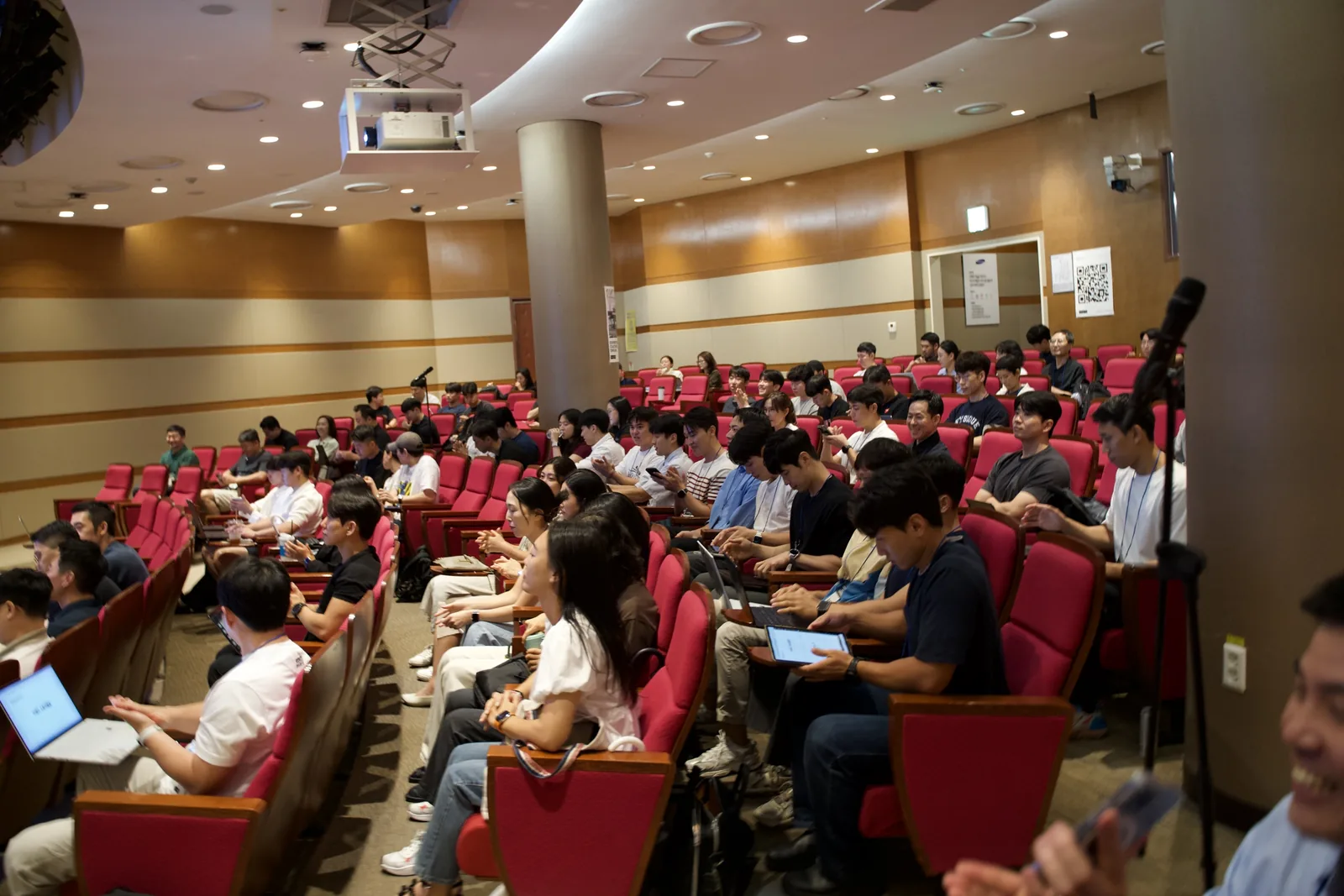
At 9 a.m. on November 22, the first lecture in the SETEC convention hall near Hangnyeoul Station began on a screen, not a stage. Professor Joel Hardwick of the University of Illinois Chicago (UIC) had sent a recorded video presenting the American College of Sports Medicine (ACSM) Top 20 fitness trends for 2027. Now in its 21st year, the survey's 2027 edition appeared in the November/December issue of ACSM's Health & Fitness Journal, and 1,433 exercise professionals scored 50 candidates by how widely each is seen across the industry. Personal preference and health benefit were left out of the scoring.
So the list says less about which exercise is best and more about what clients are looking for when they walk through the door. For trainers, it is also a picture of the clients who will sit down in next year's consultations: clients wearing a device on their wrist, clients losing weight on medication, clients with a race date on the calendar. We start with how the ranking moved.
Top 10: three technology trends hold, group classes climb
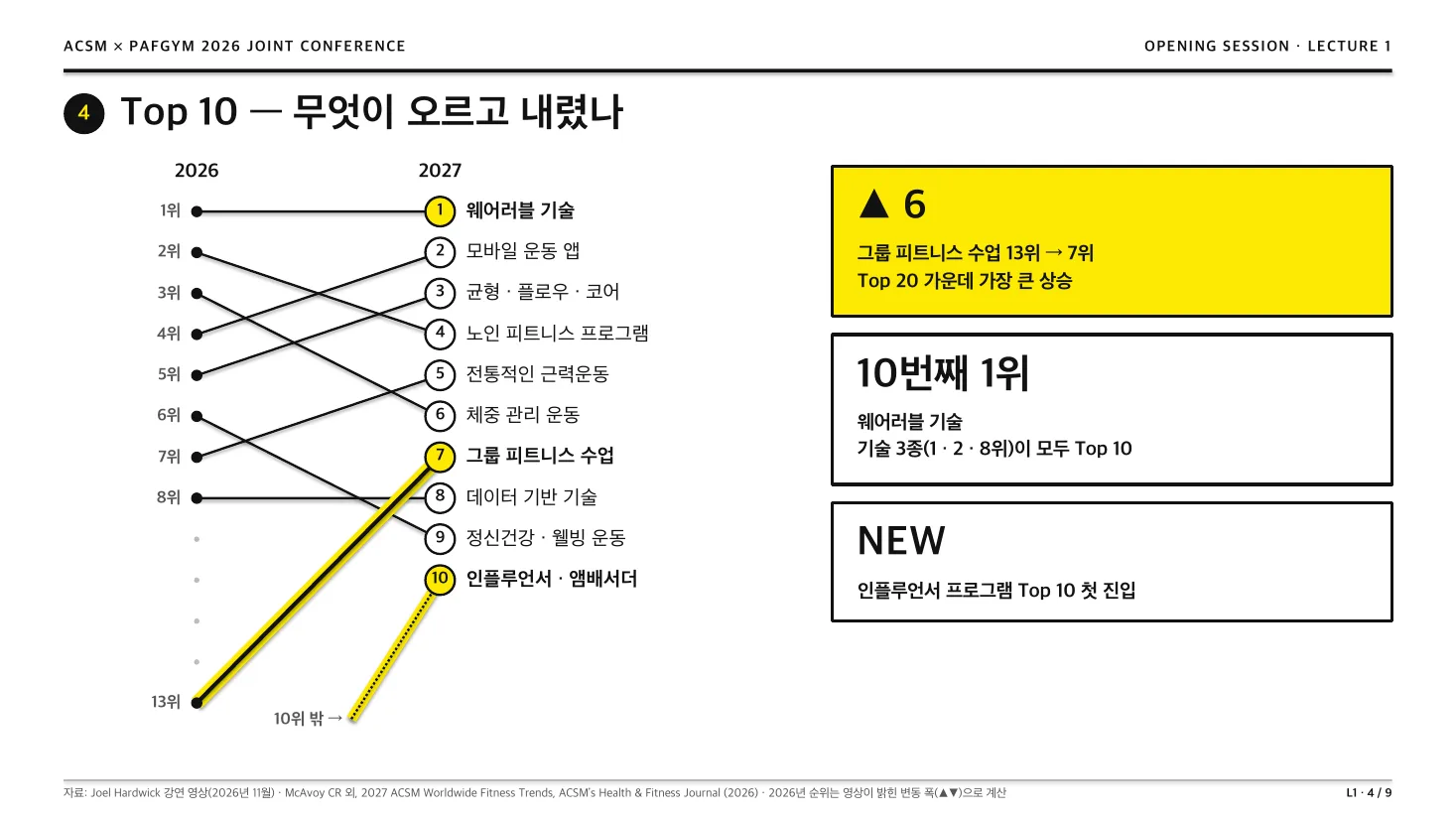
The top has not changed. Wearable technology has been in the top three every year since it entered the survey in 2016, and this is its tenth time at No. 1. Split by professional role, wearables were the only trend in the top three of every group. With mobile exercise apps climbing from 4th to 2nd and data-driven technology holding 8th, all three technology trends are in the Top 10.
Group fitness classes moved the most, up six places from 13th to 7th, the biggest rise in the Top 20. Traditional strength training rose from 7th to 5th, and balance, flow and core strength from 5th to 3rd. Going the other way, fitness programs for older adults slipped from 2nd to 4th, exercise for weight management from 3rd to 6th, and exercise for mental health and well-being from 6th to 9th. Influencer- and ambassador-led programs, outside the Top 20 in 2026, rose to 10th and entered the Top 10 for the first time.
Group fitness classes moved the most.
Ranking shifts show how clients are changing
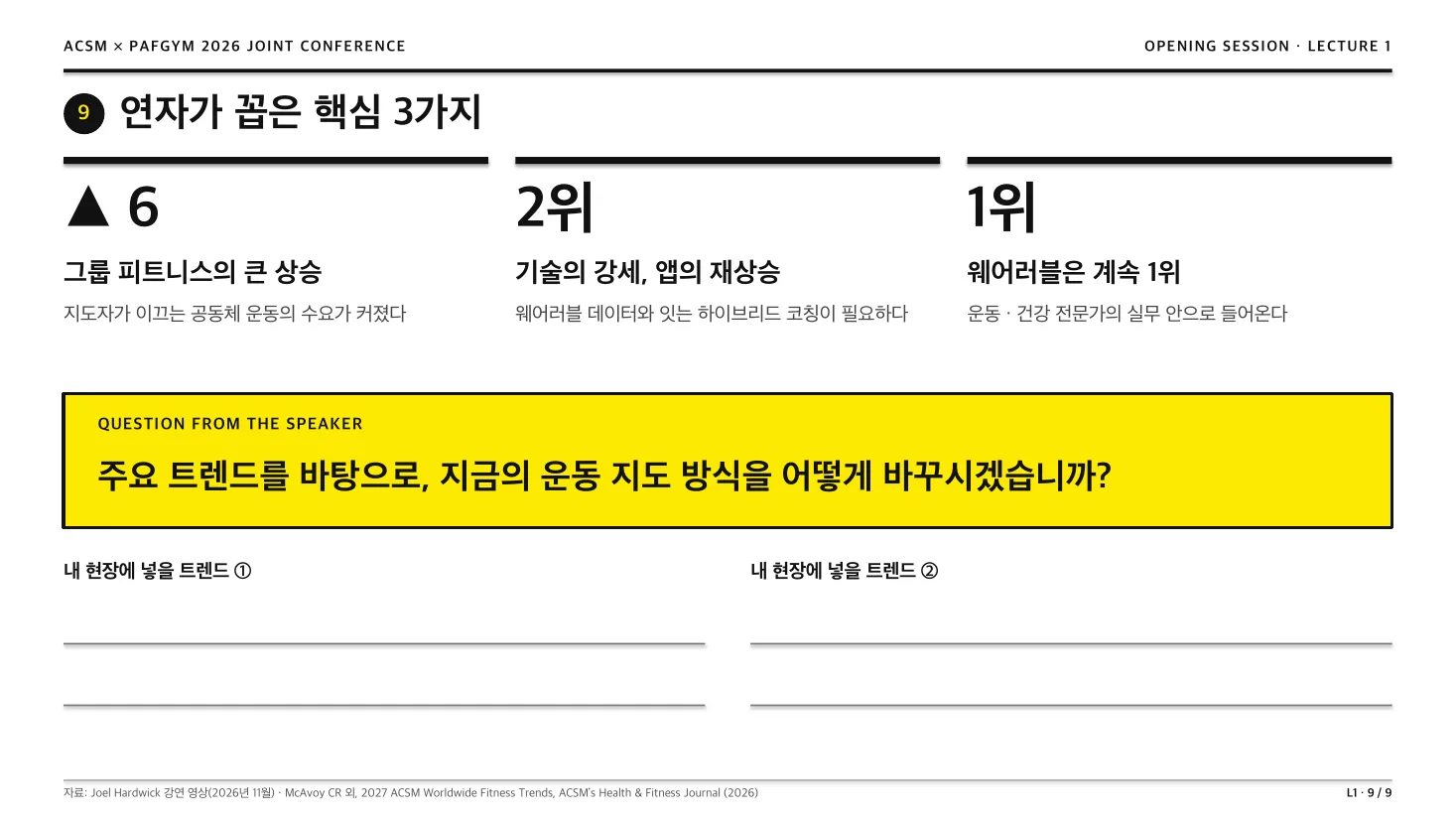
Put the risers and fallers side by side and you can see where clients' expectations are moving. Hardwick summed up the rise of group classes as growing demand for leader-led community exercise. The words attached to this trend in the lecture were social connection, instructor guidance and adherence. Clients who have stopped exercising on their own are the ones who come looking for people to train with and a leader to follow.
Strength training came with the phrase strength for health rather than appearance. On apps returning to 2nd, Hardwick said hybrid coaching that links to wearable data, a human coach and an app working together, is needed. Clients' data keeps building outside session time, and they expect someone to read it.
The trends that fell point the same way. Exercise for weight management dropped to 6th, but the words attached to it in the lecture were GLP-1, preserving lean mass and prescribing resistance training, with the practical line pair medication with exercise. For clients losing weight on medication, it means the job left to exercise is shifting toward protecting muscle and fitness along the way. The Top 10 entry of influencer programs came with a warning: check expertise first, there is no credentialing system. Clients arrive having learned exercise on social media, and trainers need to be able to explain what their coaching is based on.
Clients who have stopped exercising on their own are the ones who come looking for people to train with and a leader to follow.
11th to 20th: one competition trend and two recovery trends enter
Below 11th, three new names appear. Hot and cold therapies entered the Top 20 for the first time at 11th, and competitive fitness events (15th) and massage, vibration and compression (16th) are new entries. As examples of the 15th trend, Hardwick named CrossFit competitions and HYROX. High-intensity interval training (12th), functional fitness (13th) and personal training (14th) are also in the Top 20.
In the same year, one competition trend and two recovery trends came in together: goals that push the body harder and the care that follows them rose side by side. Personal training is 14th. How to connect one-on-one sessions with the trends above it, such as wearables, group training and racing, is the task left to trainers.
2027 ACSM Fitness Trends: 11th to 20th
| Rank | Trend | Note |
|---|---|---|
| 11 | Hot and cold therapies | First time in Top 20 |
| 12 | High-intensity interval training (HIIT) | |
| 13 | Functional fitness training | |
| 14 | Personal training | |
| 15 | Competitive fitness events | New entry · e.g. CrossFit competitions, HYROX |
| 16 | Massage, vibration and compression | New entry |
| 17 | Adult recreation and sport clubs | |
| 18 | Outdoor fitness activities | |
| 19 | Youth athletic development | |
| 20 | Fitness at home |
Three megatrends and what PAFGYM has prepared
There are three lines in this ranking that PAFGYM has held onto for a long time: exercise for weight management (6th) alongside GLP-1; wearables (1st) with data-driven technology (8th); and hybrid racing such as HYROX, where competitive events (15th) meet group classes (7th). Wearables are No. 1 for the tenth time, weight management exercise is changing character as it pairs with medication, and competitive events entered this year. PAFGYM saw these three as megatrends that would last for years and began preparing before clients asked.
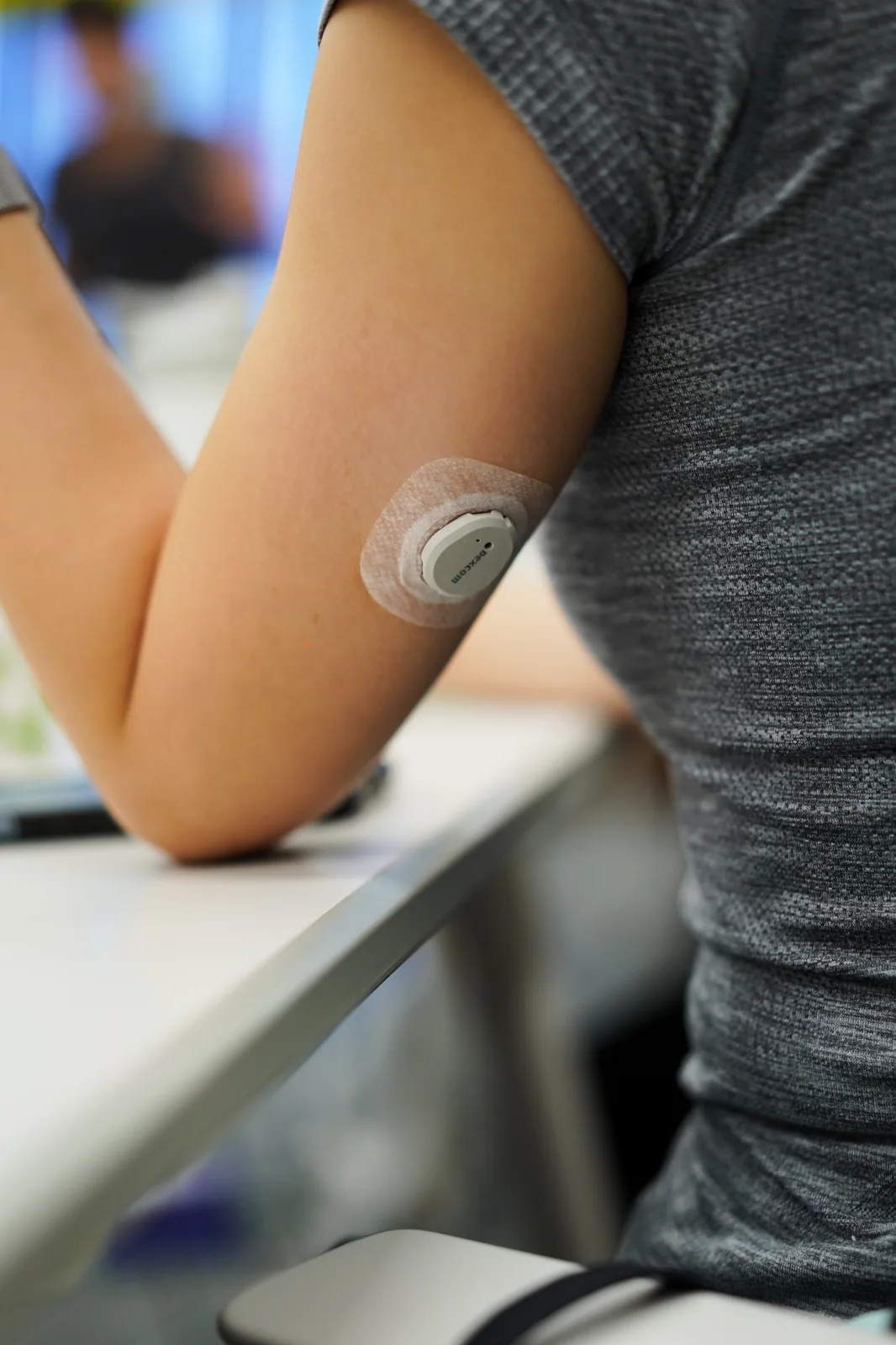
The data side started in November 2024, when trainers, including the leadership team, were trained on the PASTA app at Kakao Healthcare's headquarters and wore a continuous glucose monitor (CGM) themselves for ten days. In February 2025 PAFGYM opened a one-on-one glucose management program, and in January 2026 it signed a business agreement with Kakao Healthcare. Records from 35 trainers who wore CGMs while training from June to November this year were presented in Session 2 of the conference.
GLP-1 work deepened in 2026. In April, co-founder Cha Ju-ho presented on the GLP-1 market and fitness guidelines by type of obesity in women at a seminar of the Korean Association of Certified Exercise Professionals, and in July the whole staff studied a GLP-1 fitness guide together. In August an internal study organized resistance training and session checklists into three periods: while on medication, while preparing to reduce or stop it, and after stopping.
Hybrid racing began with a running club. Sunday Runday, a free running meet-up started in August 2022, runs every month with trainers as pacers, and reached its 50th session in October 2026. About 240 people came to the fourth-anniversary run. In February 2025 HYROX participation was added to the trainer Career Ladder score, and on the conference stage co-founder Yoo Ji-sang said 13 PAFGYM trainers had already raced HYROX. The themes of the three sessions followed these three lines too; why the program was built that way is told in a separate column on planning the conference.
How PAFGYM prepared the three lines
- 01
2022.08
Sunday Runday begins
Free running meet-up with trainers as pacers. 50th session in October 2026
- 02
2024.11
Trainers wear CGMs first
PASTA app training at Kakao Healthcare, ten days of wear
- 03
2025.02
1:1 glucose program · HYROX in career score
Glucose management program launched; HYROX added to the Career Ladder
- 04
2026.01
Agreement with Kakao Healthcare
Partnership linking training with a health app
- 05
2026.07–08
GLP-1 training and internal study
Resistance training organized for three periods: on, tapering, and off medication
- 06
2026.11
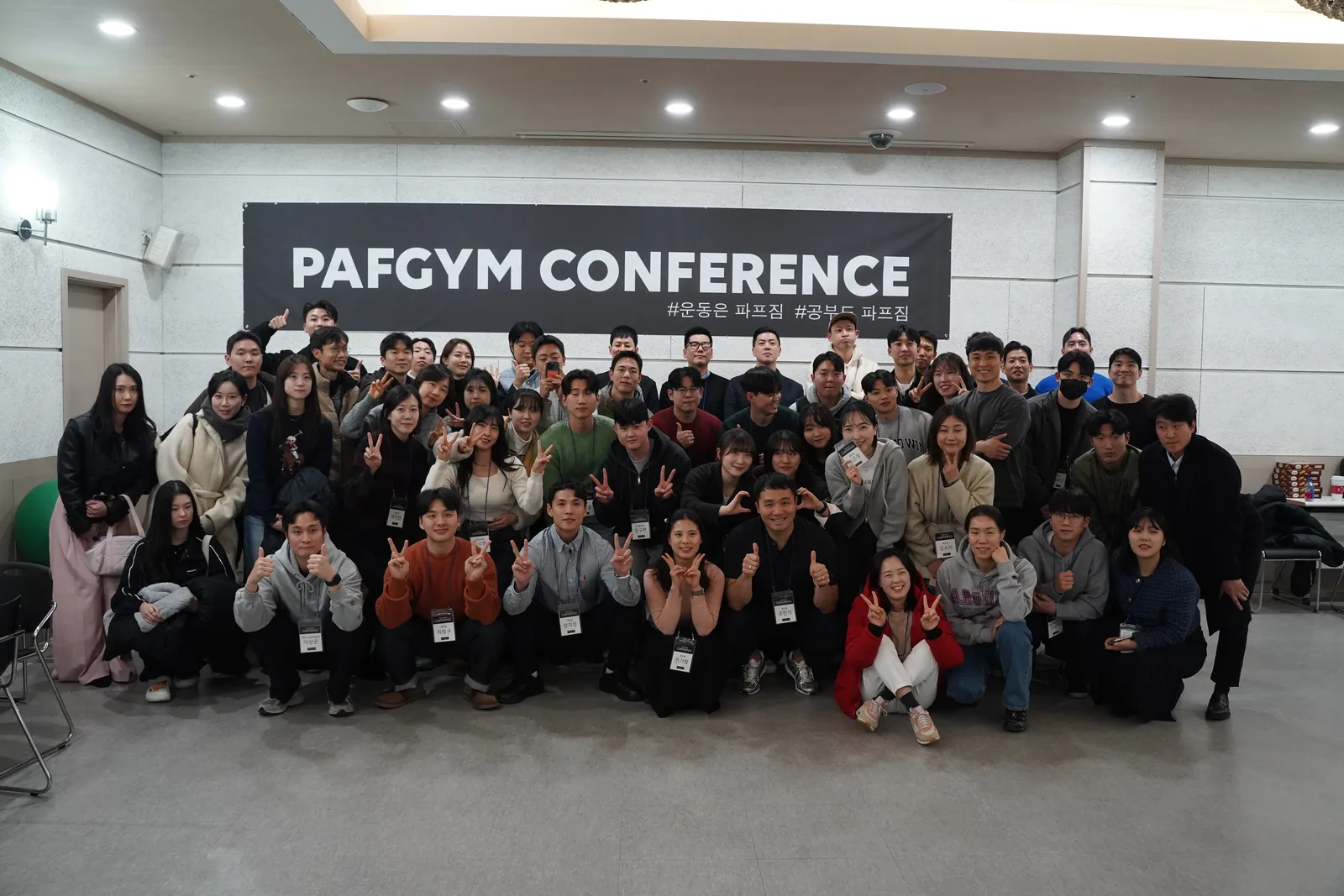
ACSM × PAFGYM Conference
Three sessions: obesity care, data coaching, hybrid racing
What changes in tomorrow's consultation room
Read the whole Top 20, then look back at the consultation room door, and the client has changed. Next year's clients will walk in already carrying data, goals and people to train with. The data on their wrist, the medication they have been prescribed, the race date on their calendar, the exercise they saw on social media. A trainer's job no longer ends with planning a good hour; it widens to bringing what clients carry in into the session.
At the end of the lecture, Hardwick asked the trainers on the other side of the screen how they would change the way they coach based on these trends. Here is what can change from tomorrow's first consultation.
- Add questions to the first consultation: the devices clients wear and the apps they use, whether they are on weight management medication, and whether there is a race they want to enter this year or a group they train with. Starting, dosing and stopping medication is for the prescribing doctor to decide.
- Open wearable data together with the client during consultations and turn it into one action to change that week.
- For clients losing weight on medication, record strength and everyday fitness such as stairs and walking alongside body weight, and keep resistance training in the program.
- For clients who keep stopping when they train alone, connect them to something that ties them to other people, such as a group run or a team race.
- When a client brings an exercise from social media, explain whether to include it or leave it out, and why.
Next year's clients will walk in already carrying data, goals and people to train with.
Book a consultation at a studio near you.