FIRST RUN
Running for first-time runners
Short answer
When you first start running, rhythm and form come before speed. PAFGYM trainers progress through marching in place, walking, slow jogging, jogging, and running, and have you practice short strides so your feet land beneath your body. If it is hard to start alone, you are welcome to join Sunday Runday along Yangjaecheon on the third Sunday of every month.
Your first runs, in five steps
- 01
Marching in place
Learn the rhythm using arms and legs together
- 02
Walking
- 03
Slow jogging
About walking speed, or slower than 8 km/h
- 04
Jogging
- 05
Running
Can I start running right away?
If your body isn't used to running, it is safer to progress in stages. When coaching members in running, Manager Ahn Jun-yong uses this order: marching in place, walking, slow jogging, jogging, then running.
Slow jogging means running at about walking speed or slower than 8km per hour. Because it doesn't leave you badly out of breath, anyone can start easily, and it is a good way to learn the basic movements of running.
How do I learn the basic posture?
Slow jogging is learned in three stages.
- Step 1, marching in place: use your arms and legs together, bring your knees forward, and keep your feet beneath your body's center line. Let your feet land naturally from the ball of the foot to the midfoot to the heel.
- Step 2, running in place: jog lightly in the same rhythm.
- Step 3, lean forward: tilt your body slightly forward and use that momentum to move ahead.
What is rhythm based on?
The metric used to gauge rhythm is cadence: the number of steps per minute. Over the same distance, shorter strides mean more steps and longer strides mean fewer. These days you can easily check it on a smartwatch.
According to research compiled by Manager Jeong Ui-seong of the Hannam studio, beginner runners usually take about 150–170 steps per minute, and elite athletes about 180–190. However, this varies with height, weight, leg length, and speed, so rather than forcing yourself to hit a number, start by knowing your current step count and shortening your stride a little.
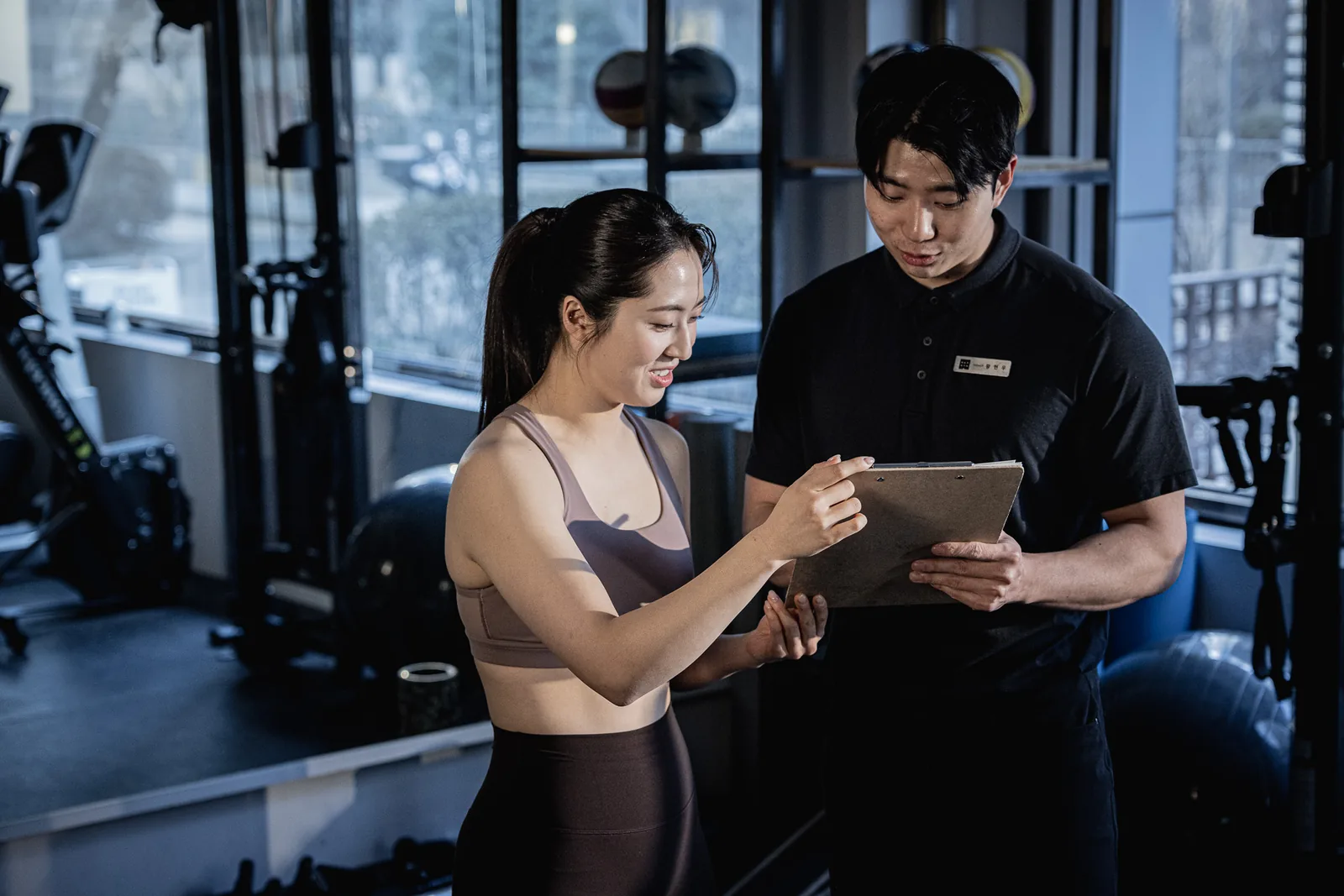
What does the trainer look for and correct?
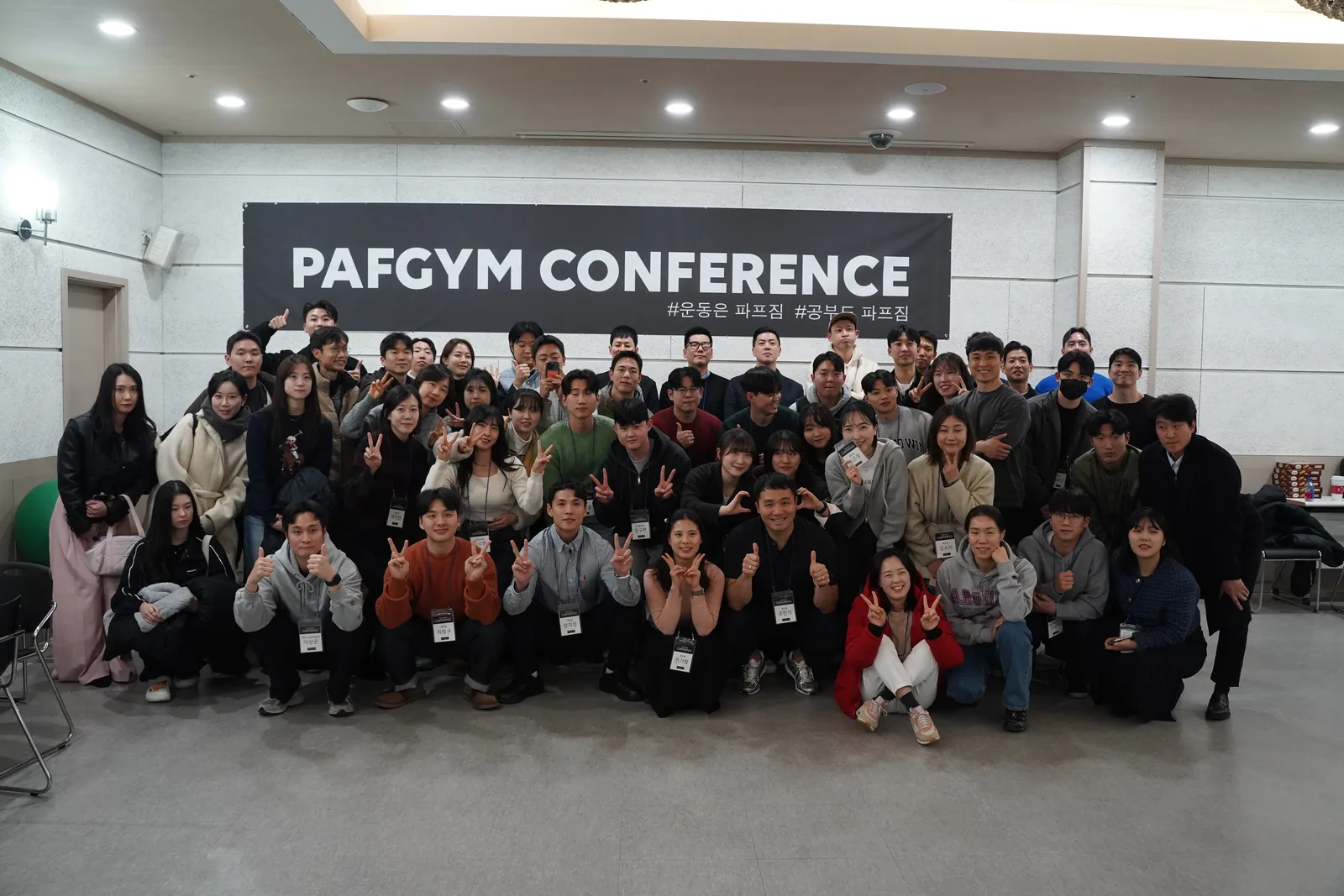
In February 2026, 25 PAFGYM trainers held a beginner running coaching workshop with coach Lee Yeon-jin, a former elite marathon runner. They learned drills covering gaze, arm swing, building rhythm, skips, and pitch, and aligned their standards for what to observe in members' running.
In sessions, we use these observation points to add strength work that builds lower-body and core strength. Rather than only increasing running time, we also build a body that can sustain running.
Is there somewhere I can run with others?
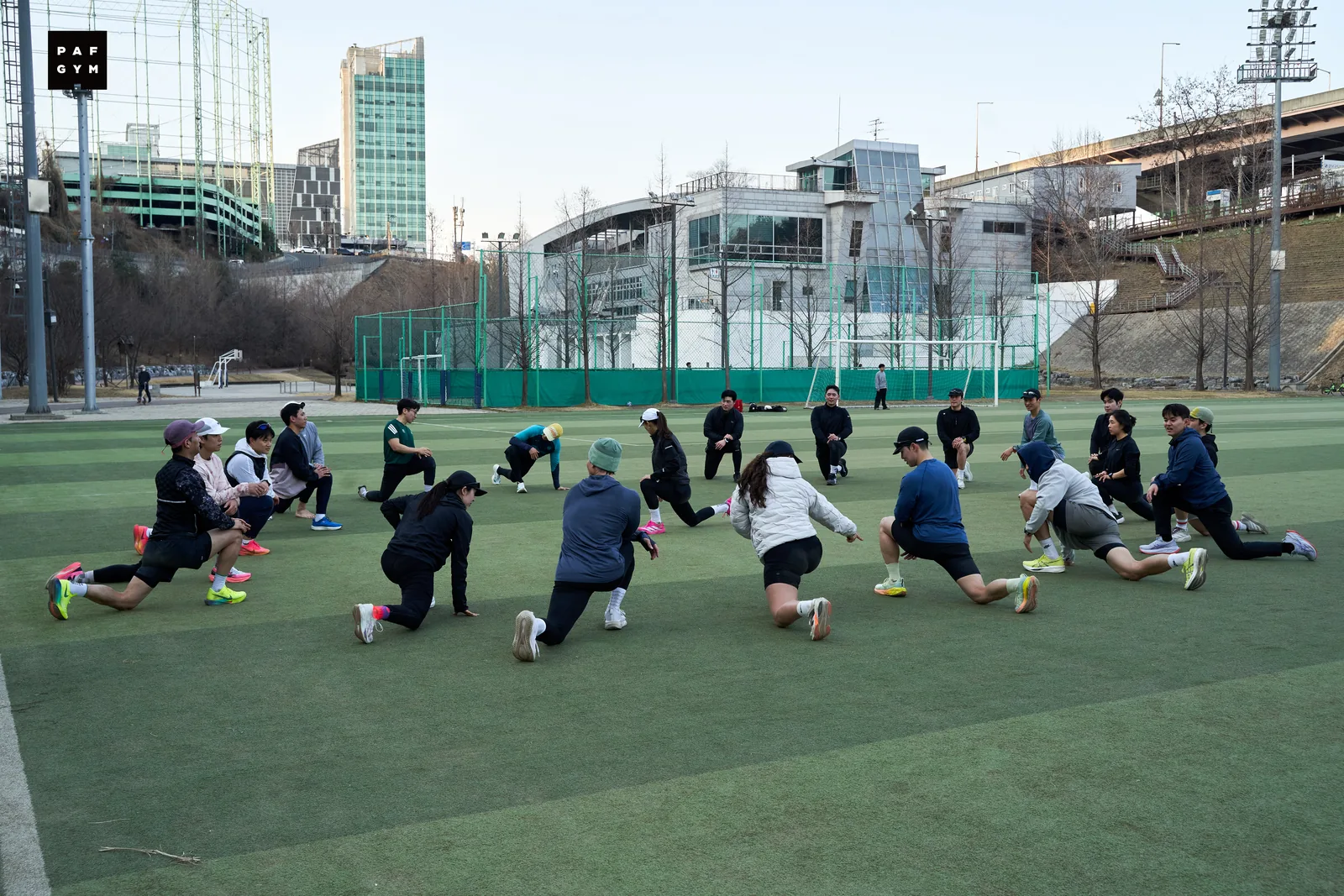
Sunday Runday, the PAFGYM run club, is a free running meetup that started in August 2022. On the third Sunday of every month at 8 a.m., we warm up at the Dogok studio and then run along Yangjaecheon in 3km, 4km, and 5km groups. A PAFGYM trainer paces each group, and there are no times or competition. On October 18, 2026, it reached its 50th run, and about 240 people joined the 4th anniversary meetup.
Join us for Sunday Runday on the third Sunday of this month, or get a running consultation at a studio near you.